LES Annual Meeting 2026, Tuesday, Oct. 20, San Diego, CA
As the electric vehicle (EV) industry accelerates, patent licensing is growing more complex. Rapid technological advances, shifting global supply chains, and evolving regulations are creating new challenges for automakers and their suppliers.
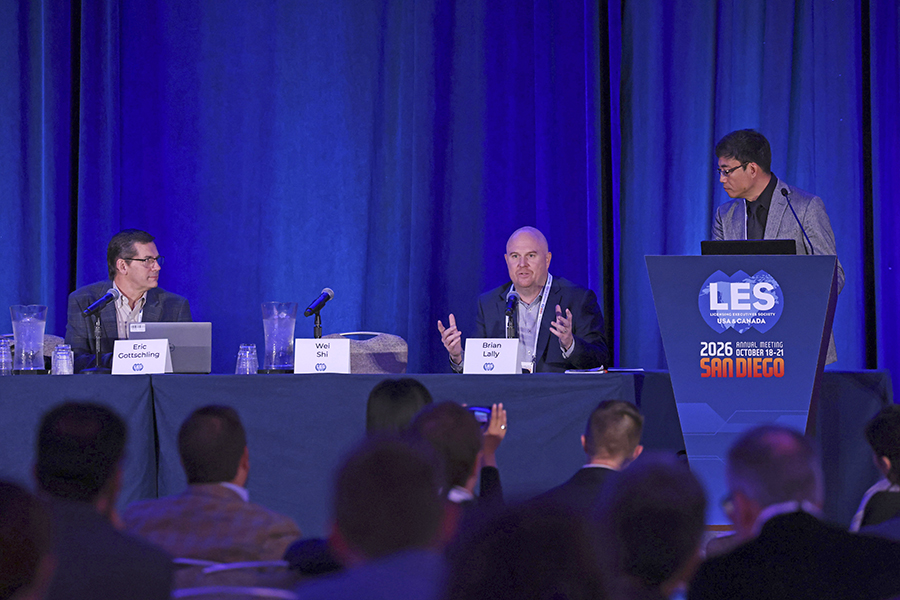
At the 2026 LES Annual Meeting in San Diego, an expert plenary panel delved into how companies are navigating this changing landscape. Moderated by Wei Shi, former Director of Corporate Business Development at Xiaomi, the panelists included Brian Lally, Chief IP Counsel at Ford Motor Company, and Eric Gottschling, Senior Manager of Licensing and Commercialization at BorgWarner Inc.
Opening the discussion, Lally described the pace of change in the automotive sector and the partnerships needed to support it. “The automotive industry is transforming, in real time, and so enabling that transformation is a big part of our job, and doing that involves a lot of partnerships around the world.”
Those partnerships add to the challenge of managing Ford’s extensive intellectual property portfolio, which includes approximately 30,000 patents and 15,000 trademarks.
Gottschling explained that BorgWarner is a Tier One automotive supplier providing powertrain technologies for combustion, hybrid and electric vehicles. From an IP perspective, one of the industry’s biggest challenges is making EVs more affordable. “I think there is an ever-growing need for cost profiles and scalability to make the electric vehicle more affordable,” he said. Consumers struggle with the price disparity between combustion-engine and electric vehicles.
Technology and Cost Pressures
Shi asked, “Which areas of EV technology are creating the greatest licensing complexity?”
Lally identified batteries as a critical area, describing them as the heartbeat of an electric vehicle. “The licensing and IP revolving around them are really critical.” Ford is also exploring battery applications beyond automotive, including energy and stationary storage, further expanding the potential licensing landscape.
Connectivity is another significant source of risk. Wi-Fi and wireless technologies involve substantial patent exposure, including standard-essential patents in the digital communications space. The challenge increases as manufacturers integrate technologies from multiple sources. “It’s the integration of all these that makes it super complex. In addition, we are pulling together IP from multiple suppliers,” Lally explained.
Gottschling pointed to batteries as an area experiencing particularly rapid technological change. “Batteries are an area that we see the greatest amount of churn. The technology is changing so fast that you might have a 28-month product cycle and half-way through they have a new solution for the battery pack material. So they need to redesign the whole thing!”
These compressed development cycles also complicate freedom-to-operate reviews. Relevant patent applications may not yet be publicly available when companies evaluate potential infringement risks. Lally cited the pace of Chinese automakers as an example. “Chinese OEMs are on a speedy 18-month development cycle that’s higher risk because they’re blinded by what they don’t know.”
Supply Chain Licensing and Disputes
Licensing practices across the automotive supply chain present another challenge. Lally noted that some patent owners prefer to license directly to original equipment manufacturers (OEMs) rather than to individual suppliers. This approach reflects a strategy of licensing at the highest component level, but it can create uncertainty about licensing coverage and royalty obligations throughout the supply chain.
“It’s a problem for suppliers, and it’s a problem for OEMs,” Lally said.
As automotive supply chains evolve, new suppliers, partnerships and joint ventures introduce additional IP risks. Lally emphasized the importance of carefully managing IP developed across different teams and geographic locations.
“If you do a joint development in the U.S. and your European colleagues at Ford develop something similar and then bring it to market, you need to be very careful.”
When disputes arise, Gottschling views litigation as a last resort. “It’s costly and time-consuming,” he said. Taking a dispute to court in multiple jurisdictions can be particularly expensive and may not resolve the underlying business problem. Instead, he encouraged companies to engage earlier and establish reasonable parameters for resolving disagreements before they escalate.
Cross-Border Licensing Due Diligence
Shi asked, “When companies negotiate licenses in multiple jurisdictions, what IP factors should they consider?”
Cross-border licensing introduces another layer of complexity. In response to Shi’s question about the IP considerations involved in negotiating licenses across multiple jurisdictions, Lally stressed the importance of understanding both the economics of an agreement and the rights being granted.
“You always need due diligence to understand what they’re bringing and where you’re going to deploy this technology.”
Companies must verify the rights a licensor actually holds in each jurisdiction, understand where products will be manufactured and delivered, determine when and where ownership transfers, and evaluate the associated tax consequences.
“Sometimes these cross-border licenses are really, really valuable, but they’re incredibly complex and they come with additional risks that you have to navigate,” Lally added.
Gottschling highlighted the importance of understanding where legal ownership of a product transfers, particularly when manufacturing and delivery take place in different countries.
“It has to do with the whole idea that we may manufacture in a very different location than we supply the product. Where is the legal ownership of the product? Does it happen at my dock or when it arrives at Brian’s dock?” said Gottschling.
“The other thing is, you also have to be aware of the tax implications. Cross-border licenses, double taxation, and some of the treaties that happen can have a real impact on what your licensing scheme looks like. There’s not one license we do, especially not internationally, that we don’t have tax counsel involved. It’s essential,” he added.
Geopolitics and Regulatory Changes
Shi also asked, “How are regulatory developments and geopolitical tensions influencing cross-border licensing strategies?”
“This is a really complicated but important topic because it’s changing all the time,” Lally replied.
Relationships with Chinese companies are often essential, but navigating China’s regulatory environment can be challenging. Lally pointed to restrictions on technology transfers, technology registration requirements, and other regulatory controls that companies must consider when structuring international partnerships. Managing these risks requires an understanding of the regulatory environment in each market.
Gottschling emphasized that strong working relationships can help companies navigate these challenges. “It’s got to be a good working relationship; otherwise, it’s going to take more time and money. You’ll get so much more done if you sit across the table and try to work it out. It brings great value to both sides.”
Building trust is particularly important when unexpected problems arise, he added.
A Broader Approach to Licensing
The panelists agreed that licensing agreements have become increasingly complex, requiring input from disciplines beyond intellectual property, including compliance, government affairs, export controls and tax experts. Missing even a minor detail can cost millions of dollars.
Staying ahead requires monitoring regulatory developments and being prepared to adapt. New Chinese regulations or U.S. executive orders can emerge at any time, forcing companies to reassess and potentially restructure their licensing arrangements.
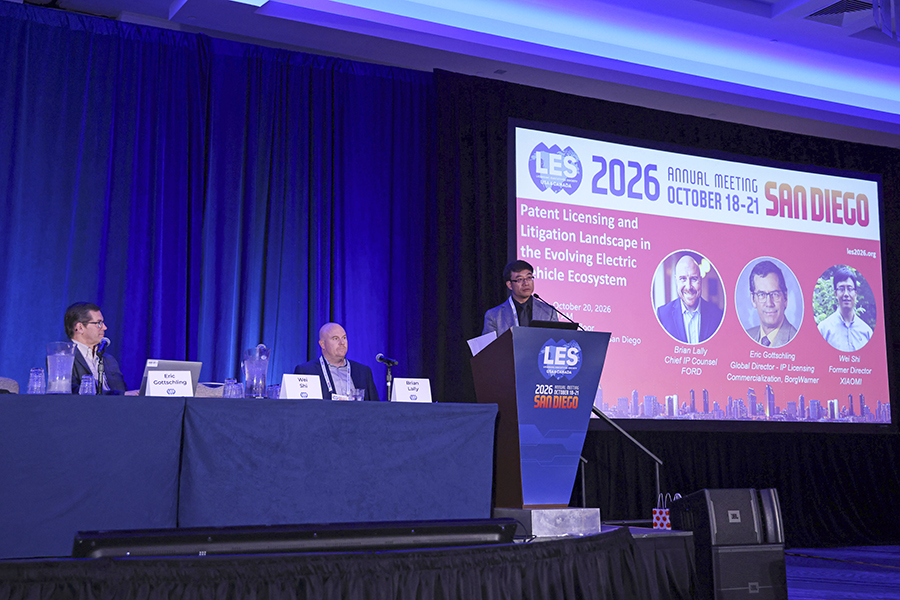
Patent Licensing in the Electric Vehicle Ecosystem Plenary Panel: Eric Gottschling (left), Brian Lally and moderator Wei Shi.

Get Social