Reported by Michele Riley, edited by Carla J. Blackman
Behind nearly every life-changing technology lies an often-invisible engine: intellectual asset licensing. That engine—and the policies needed to keep it running—were the focus of a milestone LES Public Policy Forum held at the U.S. Capitol on June 12, 2026.
More than 55 leaders from Congress, the executive branch, universities, industry, and the legal community gathered to examine how intellectual asset licensing and strong IP rights fuel innovation, economic growth, and national security.
The event featured five panels exploring the legislative landscape, patent policy, university technology transfer, industry standards, and perspectives from leading technology and life-sciences companies.
The forum was organized by Brian O’Shaughnessy, Chair of the LES Public Policy Committee and Past-President of LES USA & Canada, who credited Mihaela Bojin (LES USA & Canada President-Elect) with envisioning the event. Meeting Chairs were LES USA & Canada board members Chitra Kalyanaraman, Assistant General Counsel, Data Enablement at Johnson & Johnson MedTech, and Eric Gottschling, Global Director of Licensing Commercialization at BorgWarner. Honorary Meeting Chairs were former Chief Judge Paul Michel of the U.S. Court of Appeals for the Federal Circuit, and Phil Johnson, Principal at Johnson-IP Strategy and Policy Consulting.
Building Consensus on Capitol Hill
The opening panel, moderated by Brad Watts of the U.S. Chamber of Commerce and Jamie Simpson of C4IP, brought together congressional staff and policy experts to discuss how intellectual property legislation advances in Congress. Panelists included: Kristi Sawert, Principal at Fish & Richardson; Francie Rooney-Becker, Chief Counsel for Senator John Cornyn; John Connolly, Chief Counsel for Senator Mazie Hirono; Liz Amster, Chief of Staff for Congressman Jake Auchincloss; John Lee, formerly Chief Counsel for IP on the House Judiciary Committee; and Peter-Anthony Pappas, IP Policy Advisor for Senator Thom Tillis.
Although IP issues can become politically charged, panelists agreed that successful legislation depends less on party affiliation and more on education, persistence, and broad consensus. Unlike many policy areas, intellectual property continues to enjoy bipartisan support, with disagreements frequently crossing party lines rather than following partisan divides.
Speakers emphasized that meaningful legislative progress requires building overwhelming support before bills can move through Congress. Landmark measures such as the America Invents Act succeeded only after attracting broad bipartisan backing.
Panelists encouraged IP advocates to focus less on legal doctrine and more on the real-world impact of innovation. Demonstrating how patents, copyrights, trademarks, and licensing create jobs, strengthen local businesses, support university research, and drive economic growth resonates far more effectively with lawmakers than technical legal arguments alone.
The discussion also highlighted the importance of patience. The legislative progress is often incremental, with proposals requiring multiple congressional sessions before becoming law. Participants stressed that advocates should view policy development as a long-term effort rather than expecting immediate results.
USPTO Discusses Evolving Patent Policy
The second session featured a fireside chat with Brian O’Saughnessy hosting Nick Matich, Solicitor General of the U.S. Patent and Trademark Office, who provided insights into the USPTO’s expanding role in patent policy, litigation, and legislative affairs.
The discussion noted that the current administration includes senior officials with extensive intellectual property experience, contributing to a strong appreciation of patents as drivers of innovation and economic competitiveness.
It was suggested that the Solicitor General’s office is playing an increasingly active role in litigation before the U.S. Court of Appeals for the Federal Circuit while also advising the USPTO on legal issues. Recent initiatives include filing additional amicus briefs and identifying opportunities to strengthen patent eligibility under Section 101.
The conversation also examined the USPTO’s ongoing rulemaking for inter partes review proceedings. It was noted that the agency has received thousands of public comments, all requiring careful evaluation before final rules can be issued.
Another topic was the Standard Essential Patent (SEP) working group, whose mission is to ensure U.S. leadership in standardized technologies. The hope is for standards to be adopted worldwide. The working group is engaging leaders across industries to better understand licensing issues surrounding standardized technologies. Broad participation in writing these standards is important; if you are interested, please reach out to sepworkinggroup@uspto.gov
Throughout the discussion, Matich emphasized that patents achieve their greatest value only when they are successfully commercialized through licensing or enforcement. If patents aren’t enforceable or licensable, they have no value. The session concluded by encouraging members to engage with policymakers and communicate IP issues, noting that opening a dialogue about drug pricing might be helpful.
Technology Transfer Remains Essential
The third session, moderated by Joe Allen, Executive Director of the Bayh-Dole Coalition, examined the continuing importance of university technology transfer. Panelists included Giorgio Rizzoni of The Ohio State University Center for Automotive Research, Megan McKeown of the Association of Public and Land-grant Universities, and Eric Wachsman of the Maryland Energy Innovation Institute.
The discussion centered on the premise that innovation does not end with invention. Universities generate groundbreaking discoveries through federally funded research, but those discoveries benefit society only when they are successfully transferred to the marketplace. Technology transfer offices, licensing professionals, and industry partnerships remain essential to bridging that gap.
Participants identified several challenges facing today’s innovation ecosystem, including debates surrounding the Bayh-Dole Act, proposed changes to march-in rights, increasing regulatory requirements, and reductions in federal research funding. Together, these developments could slow commercialization and weaken incentives for private investment.
Another recurring theme was the limited incentive structure within academia for pursuing patents. Faculty advancement typically depends on publications and research grants rather than on commercialization, making it difficult to encourage researchers to invest time in patent development even when discoveries have significant commercial promise.
Panelists stressed the importance of preserving the decentralized technology transfer framework established under the Bayh-Dole Act. They argued that predictable licensing policies encourage investment and strengthen collaboration among universities, government, and industry.
The discussion also addressed increasing global competition, particularly from China, underscoring the need for strong patent protections and sustained research investment to ensure that American innovations continue reaching the marketplace.
Despite current policy challenges, the panel concluded on an optimistic note, pointing to four decades of successful collaboration among universities, industry, and government as evidence that the Bayh-Dole framework continues to drive innovation and economic growth.
LES Standards Continue to Gain Momentum
The fourth session highlighted the rapid growth of the LES Standards Program and its role in developing practical, consensus-based guidance for intellectual property licensing professionals.
Panelists Evelyn Chen of Ericsson, John Kolakowski of Nokia, and David Rikkers of Expedited Climb described how the initiative has evolved into a broad collaborative effort representing diverse perspectives across the licensing community.
The speakers explained that eight standards projects are currently underway, each led by dedicated committees working through a structured consensus process. While differing viewpoints inevitably arise, panelists emphasized that balanced participation and a variety of perspectives ultimately produce stronger, more practical standards. They credited Bill Elkington (past LES USA & Canada President) and Matteo Sabbatini as strong leaders for the initiative.
The program recently completed a successful accreditation audit by the American National Standards Institute (ANSI), reinforcing confidence in both its governance and development process.
Balanced representation remains a defining feature of the LES Standards Program. Committees intentionally include participants from multiple stakeholder groups to ensure no single constituency dominates the outcome. Attendees interested in contributing were encouraged to participate in standards committees and interest groups.
Panelists also noted that standards development does not end with publication. Three standards have already been released by the LES Standards Program, but committees continue refining them as licensing practices evolve.
During audience discussion, participants explored how organizations with well-established internal practices can benefit from participating in standards development. The panel observed that LES provides the neutral forum needed to build credibility while allowing organizations to help shape future best practices.
The session concluded by emphasizing the close relationship between standards development and public policy. Rather than relying solely on government regulation, the LES Standards Program enables licensing professionals to develop practical frameworks that can guide the future evolution of the IP ecosystem.
Industry Calls for Stronger Patent Rights
The fifth and final panel, moderated by former Chief Judge Paul Michel, featured Mark Vallone of IBM, Blair Watters of InterDigital, Laurie Self of Qualcomm, and Phil Johnson, Principal at Johnson-IP Strategy and Policy Consulting.
Representing diverse industries—including software, wireless communications, semiconductors and pharmaceuticals—the panelists agreed that predictable patent rights and meaningful legal remedies remain essential for innovation and investment.
Artificial intelligence (AI) was discussed as both an opportunity and a challenge. Participants predicted AI will improve the patent examination process, while also suggesting broader examiner interviews could enhance prosecution quality. The creation of the Shared AI License Foundation (SAIL) will help build an ecosystem that advances AI models. IBM is a member, as is Anthropic and others.
Several speakers expressed concern that diminished availability of injunctive relief has weakened U.S. patent enforcement, particularly for owners of standards-essential patents. They argued that reduced enforcement remedies increasingly push disputes into foreign courts while weakening incentives for negotiated licensing agreements.
The discussion also highlighted the economics of innovation. Wireless technology depends on revenues generated from previous generations of research, while pharmaceutical development requires enormous investment despite low success rates. Existing exclusivity provisions, participants noted, help sustain these long-term investments.
Panelists challenged the narrative that the U.S. patent system is fundamentally broken. Instead, they argued that uncertainty surrounding patent eligibility, valuation, and enforcement discourages innovation, disproportionately affects smaller inventors, and risks shifting both research investment and litigation overseas.
A Common Theme
Across all five sessions, one message consistently emerged: innovation depends not only on invention, but also on effective commercialization. Strong intellectual property rights, predictable licensing systems, and constructive public policy provide the foundation that enables new technologies to reach the marketplace.
As LES continues expanding its public policy initiatives, this IP Forum demonstrated the Society’s growing role as a trusted facilitator, bringing together leaders from government, academia, and industry to shape the future of intellectual property and innovation. LES thanks its sponsors, Interdigital and Adeia, for making this forum possible.
Reported by Michele Riley, edited by Carla J. Blackman
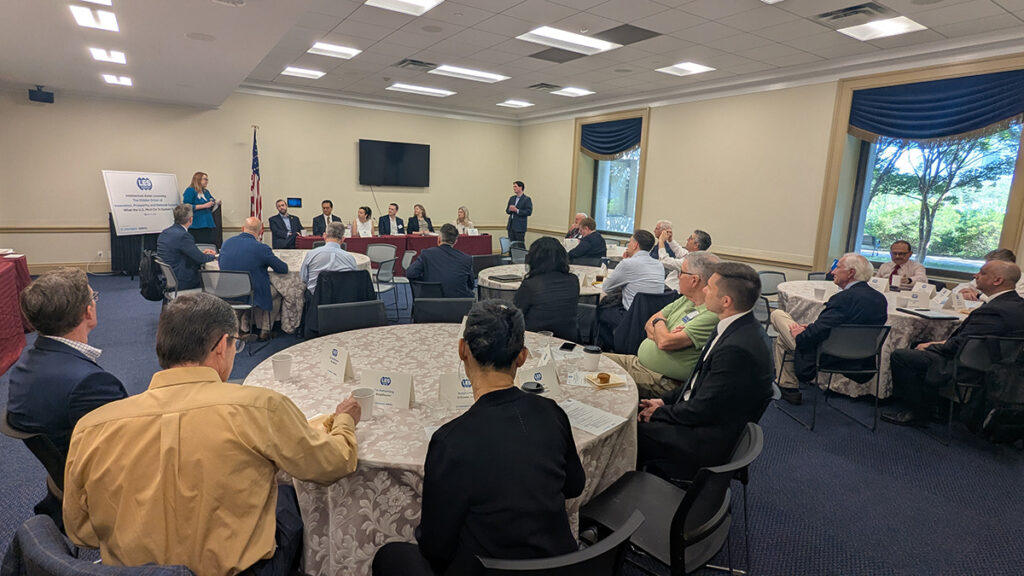
IP Forum attendees and opening panel of speakers at the U.S. Capitol
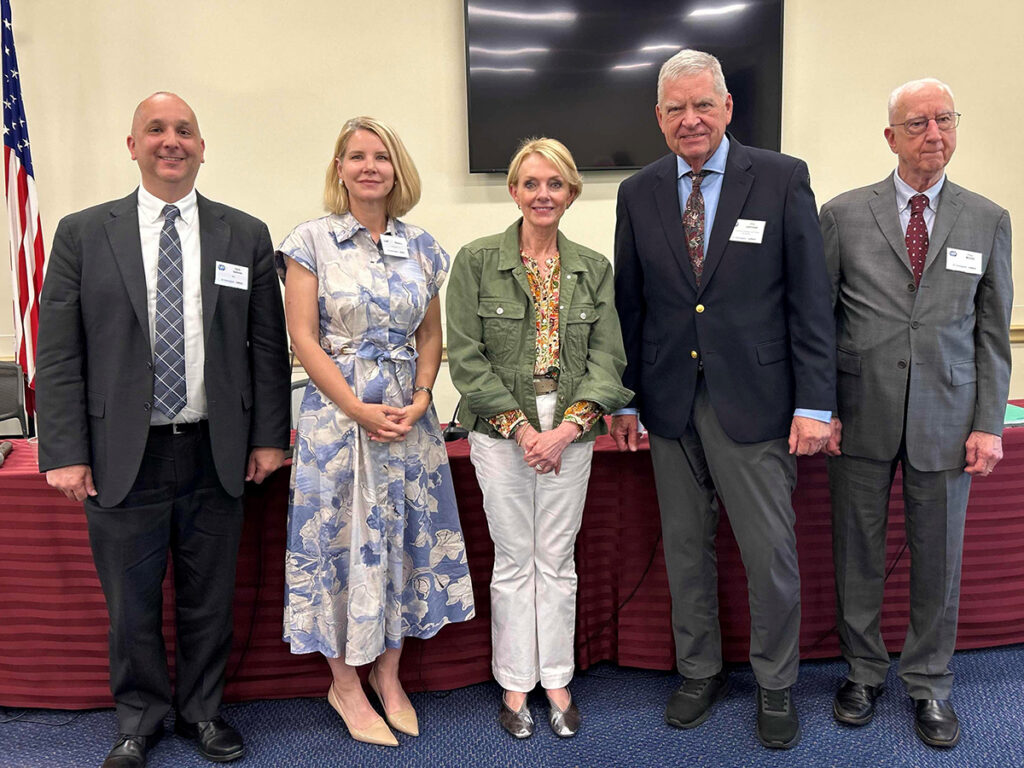
Panel Five from left: Mark Vallone, Blair Watters, Laurie Self, Phil Johnson, Judge Paul Michel
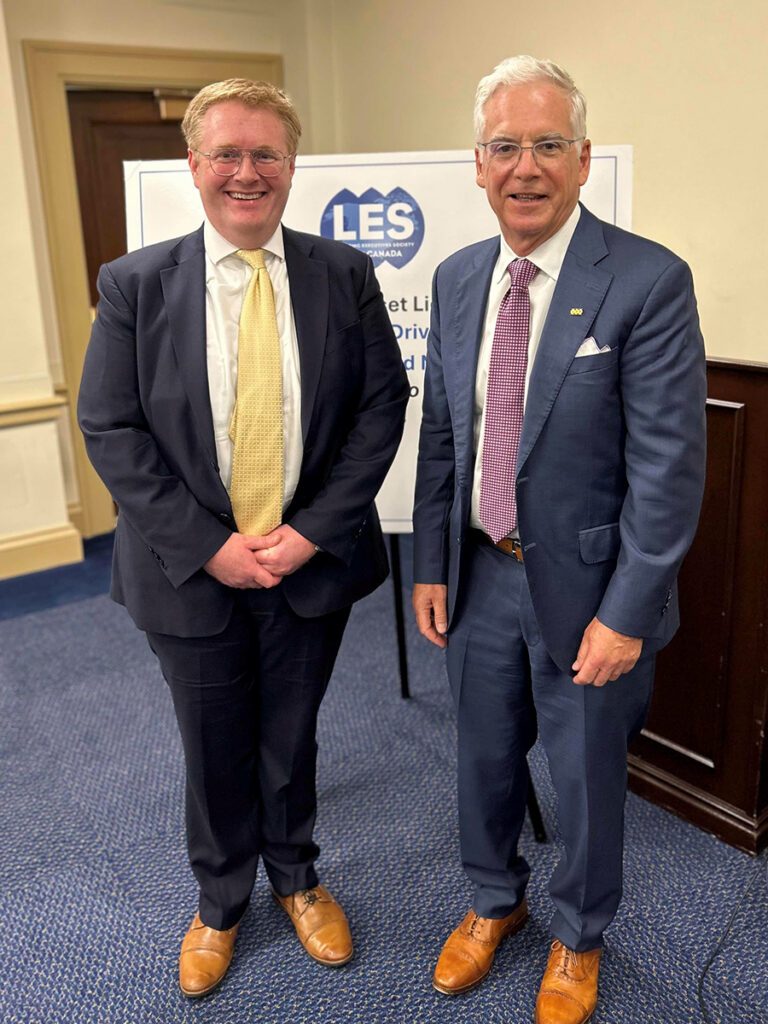
Panel Two: Nick Matich (left) and Brian O’Shaughnessy
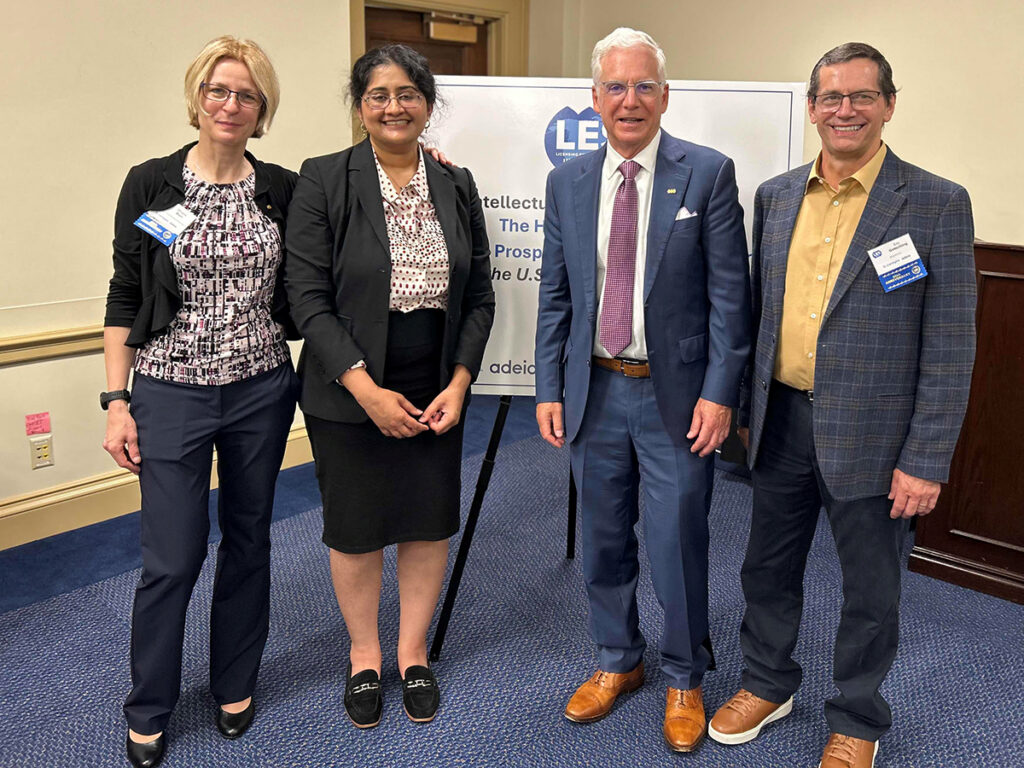
IP Forum organizers from left: Mihaela Bojin, Chitra Kalyanaraman, Brian O’Shaughnessy, and Eric Gottschling

U.S. Capitol Building, venue for the IP Forum

Get Social