LES Webinar moderated by Ray Van Dyke* with guest expert Kevin Noonan, PhD*
Patent priority over CRISPR (Clustered Regularly Interspaced Short Palindromic Repeats) is a war that’s been waged for over a decade by four separate groups that claim invention rights. At present, there’s no end in sight for resolution. This webinar explores the technology, the competing claims to invention, and how the patent resolution could affect existing licensing agreements. In this complex dispute, Dr. Kevin Noonan answers our questions.
What is CRISPR?
CRISPR is a revolutionary gene-editing technology adapted from a bacterial immune system. It allows scientists to make precise changes to DNA, such as cutting, adding, or removing genetic material. The technology offers immense potential for treating genetic diseases, developing diagnostics, and engineering organisms. The FDA approved Casgevy, made using CRISPR technology, for the treatment of severe sickle cell disease in 2023 and for transfusion-dependent beta-thalassemia in 2024.
Who are the Competing Patent Owners?
Several inventor groups are involved in the dispute, including:
- Broad: Feng Zhang; the Broad Institute, Harvard University, and the Massachusetts Institute of Technology
This group is more focused on Eukaryotic CRISPR involving human/animal/plant cells.
- CVC: Jennifer Doudna (University of California/Berkeley) and Emmanuelle Charpentier (University of Vienna). Jointly awarded the 2020 Nobel Prize in Chemistry for CRISPR.
Their foundational work is associated with Prokaryotic CRISPR involving bacteria.
Two more groups have further interference:
- ToolGen (Korean company): Jin-soo Kim et al.
- Sigma-Adrich (U.S. company): Fuqiang Chen and Gregory D. Davis
What is interference in patent law?
Interference practice was a feature under pre-America Invents Act (pre-AIA) U.S. patent law used to determine who was the first inventor of a claimed invention under the former “first-to-invent” system.
The U.S. Patent and Trademark Office (USPTO) could declare an interference when it determined that the claims of a pending patent application overlapped with claims in an already issued U.S. patent or another pending application. In some cases, applicants intentionally drafted or amended claims to trigger an interference proceeding in order to challenge competing rights.
What interferences are important in this dispute?
Dr. Noonan explains that Broad was the senior party in the initial interference involving CVC, giving Broad the advantage. The first interference was decided against Berkeley, and the second one is the focus of the discussion.
In 2017, the patent office terminated the “048 interference,” arguing that Broad’s use of CRISPR in eukaryotic cells was not obvious from their prior art. Then CVC filed multiple patent applications to provoke an interference against Broad’s patents, which the patent office declared.
Other interferences separately between Broad and CVC, such as ToolGen and Sigma-Aldrich, should be dismissed against whatever party loses the pending (‘115) interference. The PTAB will need to decide on the same grounds for these interferences, which could take another two years.
What is the main dispute?
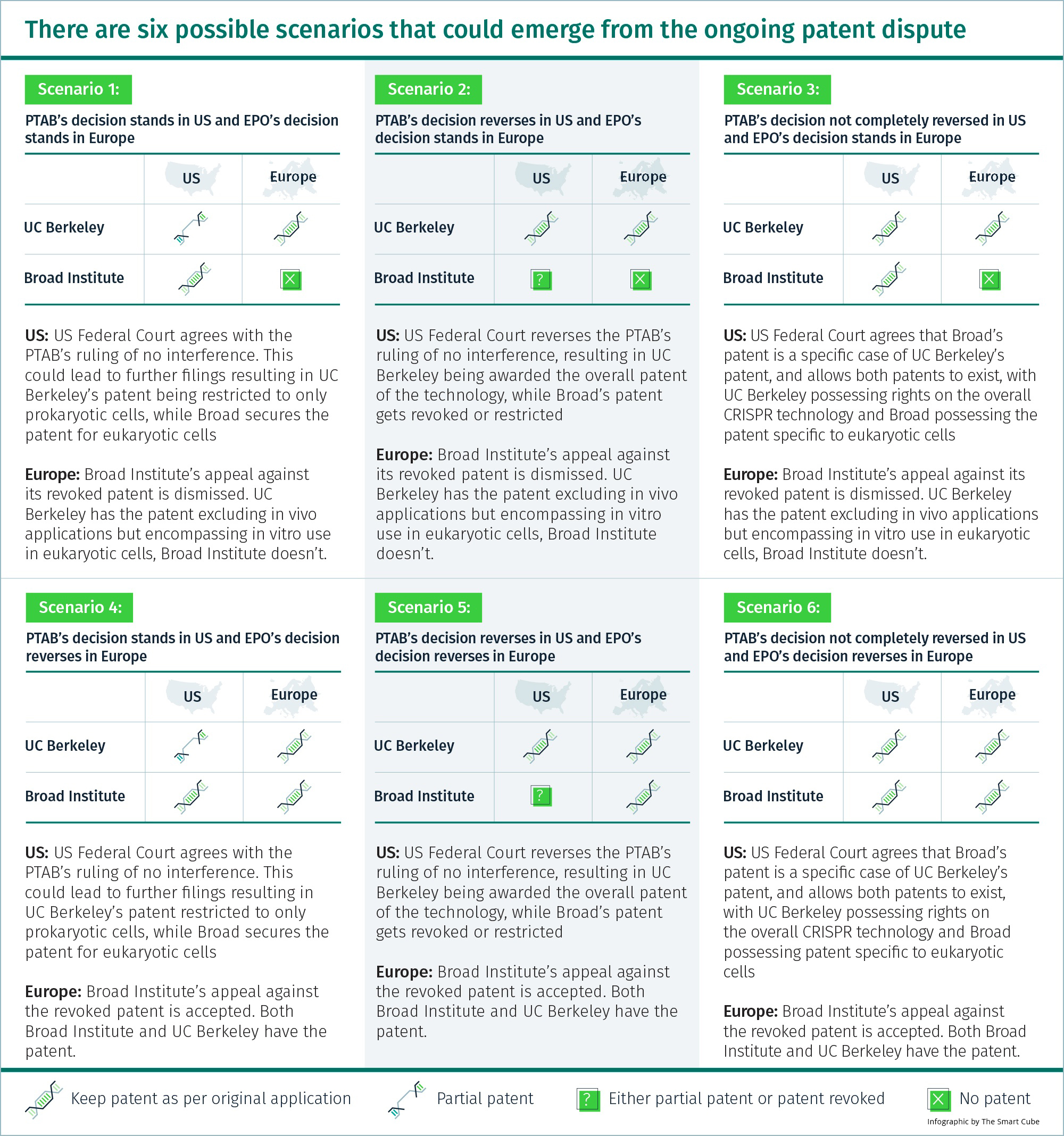
The main dispute centers on who first invented the use of CRISPR in eukaryotic cells, with Broad currently holding key patents. The Patent Trial and Appeal Board (PTAB) initially ruled in Broad’s favor, citing CVC’s failure to demonstrate working CRISPR in eukaryotic cells. The board’s decision was based on evidence that CVC had difficulties in getting the system to work (compared with Broad’s efficient success).
CVC appealed, and the Federal Circuit vacated the decision, sending it back to the PTAB to reconsider the standard for “conception” of the invention. If CVC ultimately prevails, Broad’s patents could be invalidated, impacting existing licenses and commercial CRISPR applications.
What will be the outcome of CVC vs. Broad and its impact on licenses?
Dr. Noonan discusses what happens if CVC prevails vs. if Broad prevails and the implications for licensing.
If CVC wins its patent interference, key Broad CRISPR patents could be lost. This means existing Broad licensees (Editas, and therapeutic partners, etc.) could lose core patent protection and suddenly need new or expanded licenses from CVC-aligned entities (Caribou, Intellia, ERS Genomics, CRISPR Therapeutics). Sublicenses and cross-licenses would likely require renegotiation. This means freedom-to-operate (FTO) opinions, deal valuations, and risk allocations in existing licenses could become unstable.
If Broad prevails and its patents remain valid, then the CVC-aligned entities face stronger pressure, having no exclusive rights to eukaryotic CRISPR in the face of Broad’s patent estate.
Important to licensing professionals is the fact that the same underlying technology could flip from Broad-centric to CVC-centric control, forcing massive contract and portfolio adjustments across the industry.
Dr. Noonan notes, “Broad has worked really hard to get a lot of patents granted across its portfolio.” He adds that this is a classic patent-thicket scenario, in which dense portfolios are used to control a technology space and strengthen bargaining power.
What is the Long-Term Horizon?
Ray Van Dyke’s opening comments make it clear, “There’s no end in sight… the stakes are huge, money is no object here.” He predicts that the battles being fought will carry over from the Federal Circuit to the U.S. Supreme Court. This means long-running, very expensive disputes are likely to continue. For licensing professionals, the risk includes parallel or conflicting licenses if they bet on the “wrong” winner. Ultimately, the outcome of these disputes will shape the future of CRISPR licensing, commercialization, and innovation.

*Kevin Noonan, PhD*, Attorney, McDonnell Boehnen Hulbert & Berghoff LLP
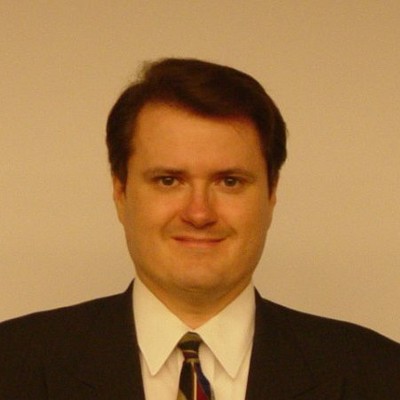
*Raymond Van Dyke, Attorney, Van Dyke Intellectual Property Law & Consulting; LES Senior Vice President, Special Events & LES Washington, D.C. Chapter Chair.
LES Members can access a FREE recording of this webinar:
LES Webinar – A Song of Fire and Splice: The CRISPR Saga, March 17, 2026
https://members.lesusacanada.org/store/viewproduct.aspx?id=27217248

Get Social