Lessons from a Silicon Valley Fireside Chat Conversation with Dr. Richard Thurston
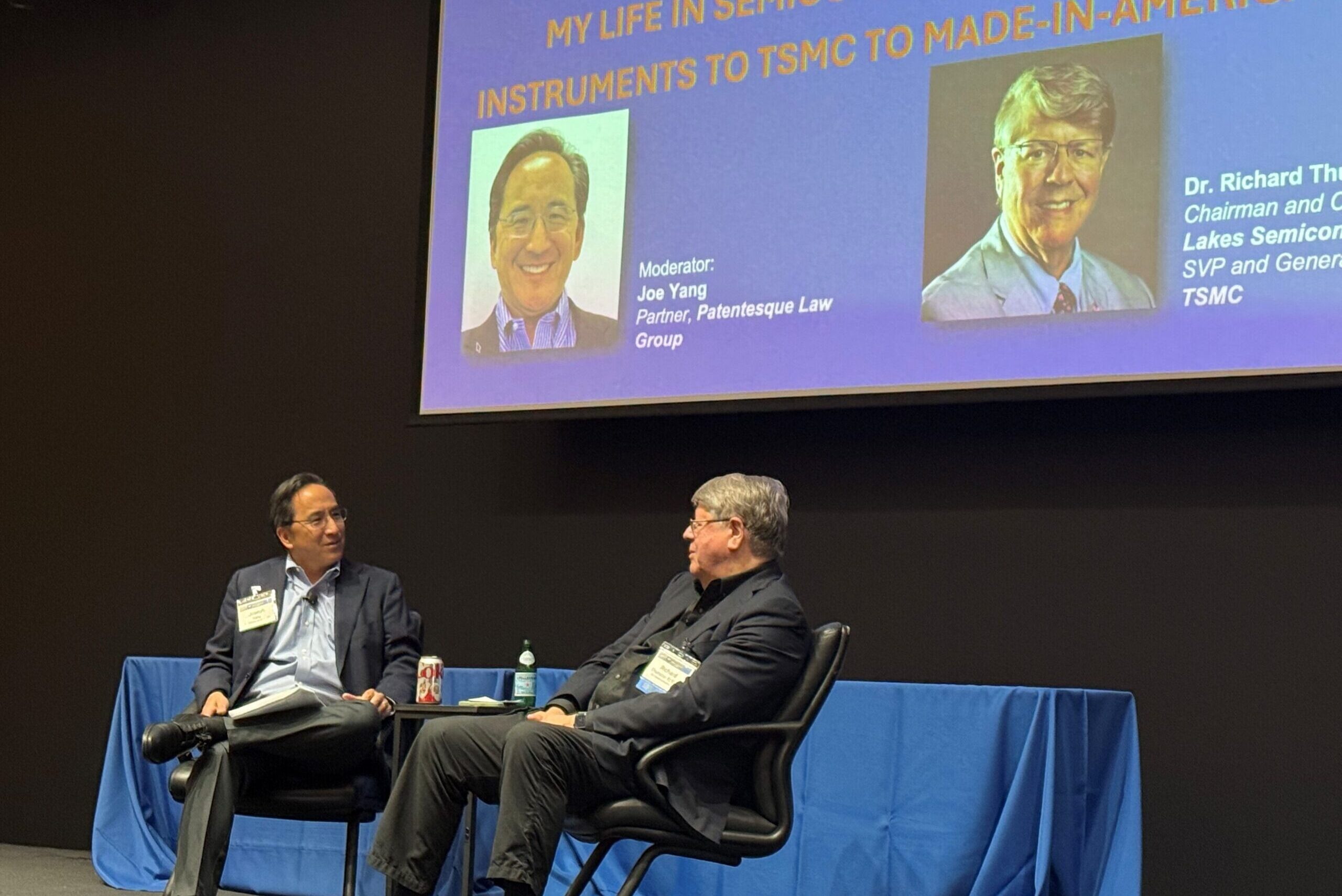
At a time when the semiconductor industry has become synonymous with economic power and national security, a recent fireside chat at the LES Silicon Valley Chapter’s 22nd Annual Conference held on April 2nd, 2026 offered a rare, deeply personal window into the forces shaping the industry: past, present, and future.
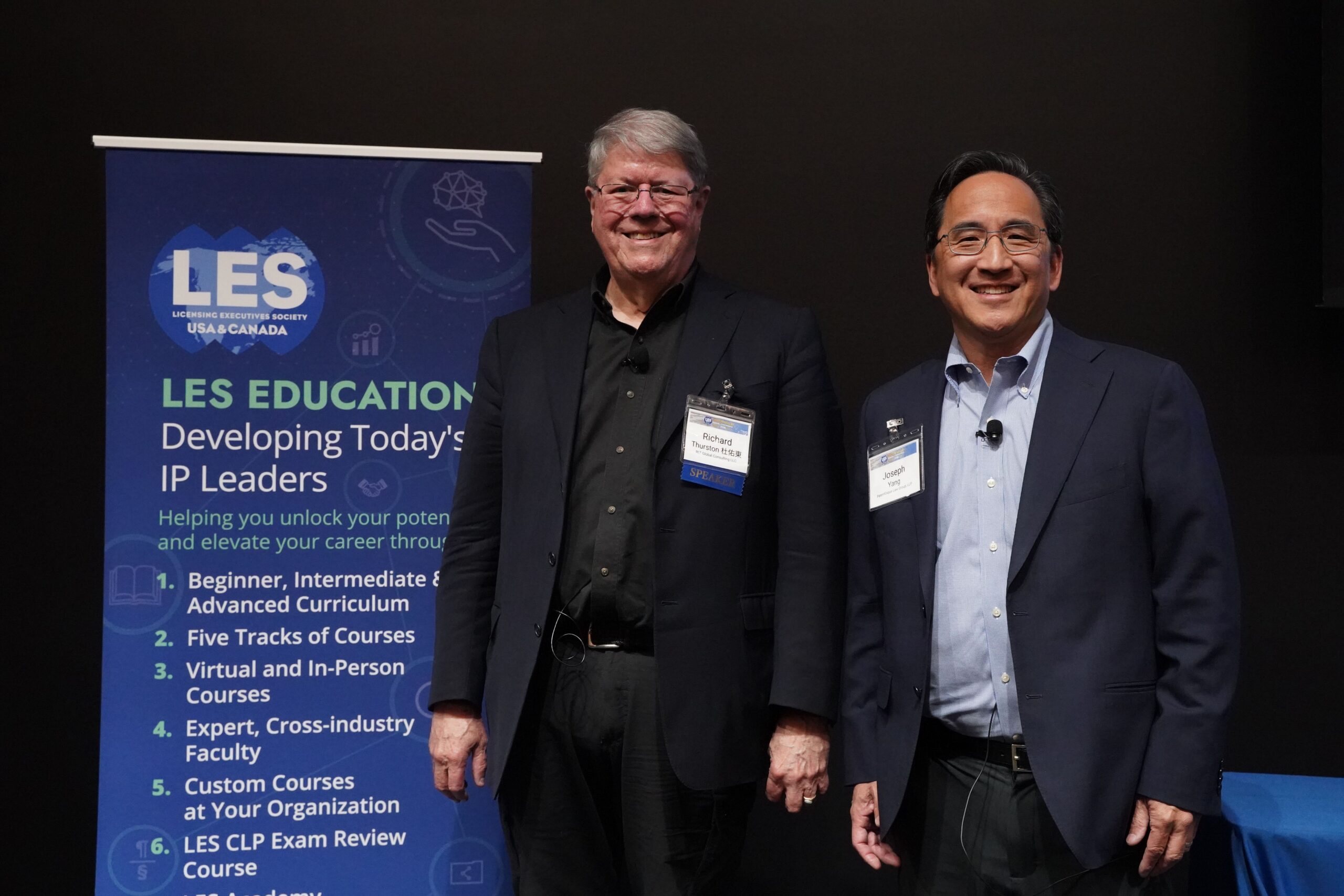
Featuring Dr. Richard (“Dick”) Thurston, a veteran of Texas Instruments and former General Counsel of TSMC, in conversation with Joe Yang, Partner at PatentEsque Law Group and Board Member of the LES Silicon Valley chapter, the discussion moved fluidly between history, geopolitics, personal career pivots, and the urgent question now confronting the United States: can it reclaim its footing in semiconductor manufacturing?
A Career That Mirrors an Industry
Dick Thurston’s career arc is itself a reflection of the semiconductor industry’s evolution. After pursuing a PhD in history, he entered law in private practice, and then pivoted into industry, joining Texas Instruments (TI) in 1984 at a pivotal moment, and later moved to Tokyo, Japan with his family in April 1987.
That period was marked by what many in the United States perceived as an existential threat: the rapid rise of Japanese semiconductor firms. As Thurston recalled, American companies were “panicked” as Japan began dominating the memory market, aided by both technical capability and structural trade barriers that limited U.S. access abroad.
At TI, Thurston was pushed beyond the traditional role of legal counsel. The directive was clear: “shed your skin as a lawyer and be a business person.” The shift from legal advisor to business leader would define the rest of his career.
From Texas to Taiwan: The Rise of the Foundry Model
Perhaps the most consequential chapter of Thurston’s career came with his move to Taiwan and his tenure at TSMC, currently the world’s largest semiconductor manufacturer, working alongside Dr. Morris Chang, the Stanford-educated (EE PhD) founder of TSMC, and the architect of the pure-play foundry model. Not surprisingly, the Computer History Museum (Mt. View, CA), where the conference was held, features Mr. Chang’s picture on its Hall of Fame wall of innovators.
The conversation highlighted the rise of Taiwan as a global manufacturing powerhouse. This shift was not accidental, as it was driven by some key developments in Taiwan, including:
- A coordinated industrial strategy
- Strong emphasis on engineering education (many, like Dr. Chang, were educated in the US and the returned to Taiwan)
- Close alignment between government, academia, and industry
- Strategic partnerships with U.S. companies
As noted during the discussion, TSMC’s early structure, with its ownership ties to Philips (which held 27.5% of TSMC’s initial equity stake), also provided an IP protective shield against patent litigation through licenses and non-assertion agreements with major patent holders. When Philips reduced its holding share in TSMC, that protection faded, and the company faced a wave of patent assertions, with 45 claims pending upon Thurston’s arrival. Thurston was involved in negotiating settlement terms with IBM and others. He also started the best-in-class trade secrets program at TSMC (which, upon his arrival, had approximately 2,700 U.S. patents but no adequate trade secrets program).
Beyond strategy and geopolitics, the fireside chat revealed a more human dimension of global business. Thurston’s PhD, which also afforded him the knowledge of the Chinese language, proved unexpectedly valuable in Taiwan. In a culture that placed enormous weight on academic achievement, it gave him credibility not only in professional settings but even in personal ones, including earning the respect of his future in-laws.
Similarly, anecdotes from his time at TSMC illustrated the intensity of leadership at the highest levels. One story described how, after a typhoon, Thurston could not get out of his apartment to attend an important in-person meeting with TSMC’s CEO, Morris Chang. Chang requested the Taiwan electric company to clear the street around Thurston’s apartment of downed power lines and trees. It was done within an hour, and Dick was able to get to the meeting in time.
The New Frontier: Great Lakes Semiconductor
Today, Thurston is focused on a new venture: Great Lakes Semiconductor, a company aiming to rethink how semiconductor fabrication is implemented and scaled in the US. Unlike traditional mega-fabs, which require tens of billions of dollars and years to construct, Great Lakes is pursuing a modular approach:
- Smaller-scale clean rooms
- Flexible, batch-oriented production
- Focus on prototypes and niche manufacturing underserved by large foundries like TSMC
This model reflects a broader industry gap. While companies like TSMC dominate high-volume production, there is increasing demand for agile, smaller-scale manufacturing—particularly for emerging technologies and early-stage innovation.
The Central Question: Why Manufacture in the U.S.?
The fireside chat highlighted the topic of “reshoring”—the effort to bring semiconductor manufacturing back to the United States. The case for reshoring is compelling, but the challenges are equally formidable. Taiwan’s dominance is not just about cost—it is about ecosystem depth. As the discussion noted, Taiwan has built “the world’s deepest bench” of manufacturing talent, supported by decades of investment and alignment across sectors. Recreating that ecosystem in the U.S. will require more than capital. It will demand coordination across: corporations, universities, venture capital, and U.S. government policy (to incentivize domestic production)
A key question emerged in the conversation: whether the U.S. can realistically rebuild its semiconductor base independently. The answer, implicitly, was: no. Partnerships with allies like Taiwan and Japan remain essential. At the same time, there is growing recognition that over-reliance on any single region creates systemic risk. This dual reality of global interdependence combined with national strategic interests defines the current semiconductor landscape.
The fireside chat ultimately captured a moment of inflection. The semiconductor industry is no longer just about technology—it is about national security and the architecture of the global economy. Efforts like Great Lakes Semiconductor represent early examples of what a US manufacturing model might look like. As Thurston’s career demonstrates, the semiconductor industry has always been defined by reinvention—and the next chapter is already underway.

Get Social